Chi-Square Calculator - Fast Chi Square Test & P-Value Analysis
Quickly perform Chi-Square values, p-values, and distribution results using our easy-to-use Chi-Square Calculator. Perfect for statistical testing, goodness-of-fit analysis, and research-grade chi square evaluation.
Chi-Square Test Results
Enter your data and click "Calculate Chi-Square" to see results
Example for Goodness of Fit:
Observed: 40, 30, 20, 10
Expected: 25, 25, 25, 25
Result: χ²(3) = 20.0, p = 0.0002
Example for Independence:
2x2 Table: [[50, 30], [20, 40]]
Result: χ²(1) = 9.615, p = 0.0019
Related & Other Popular Calculators
The Chi-Square Test is the one of the most used Statistical Methods to determine a significant difference between Observed and Expected Data. Our Chi-Square Calculator makes it easy to calculate Chi-Square Test Statistics (Chi-Square Test Statistics, Chi- Square) test statistics/p-value and Distributions instantly so that you are able to take action on your Data that is based on accurate Data Points.
Whether you want to know how to obtain the Chi Square formula, have curiosity about what a Chi Square test works or are looking for a real chi square analysis example, this guide has everything you need to know clearly without confusion and in an easy-to-read format.
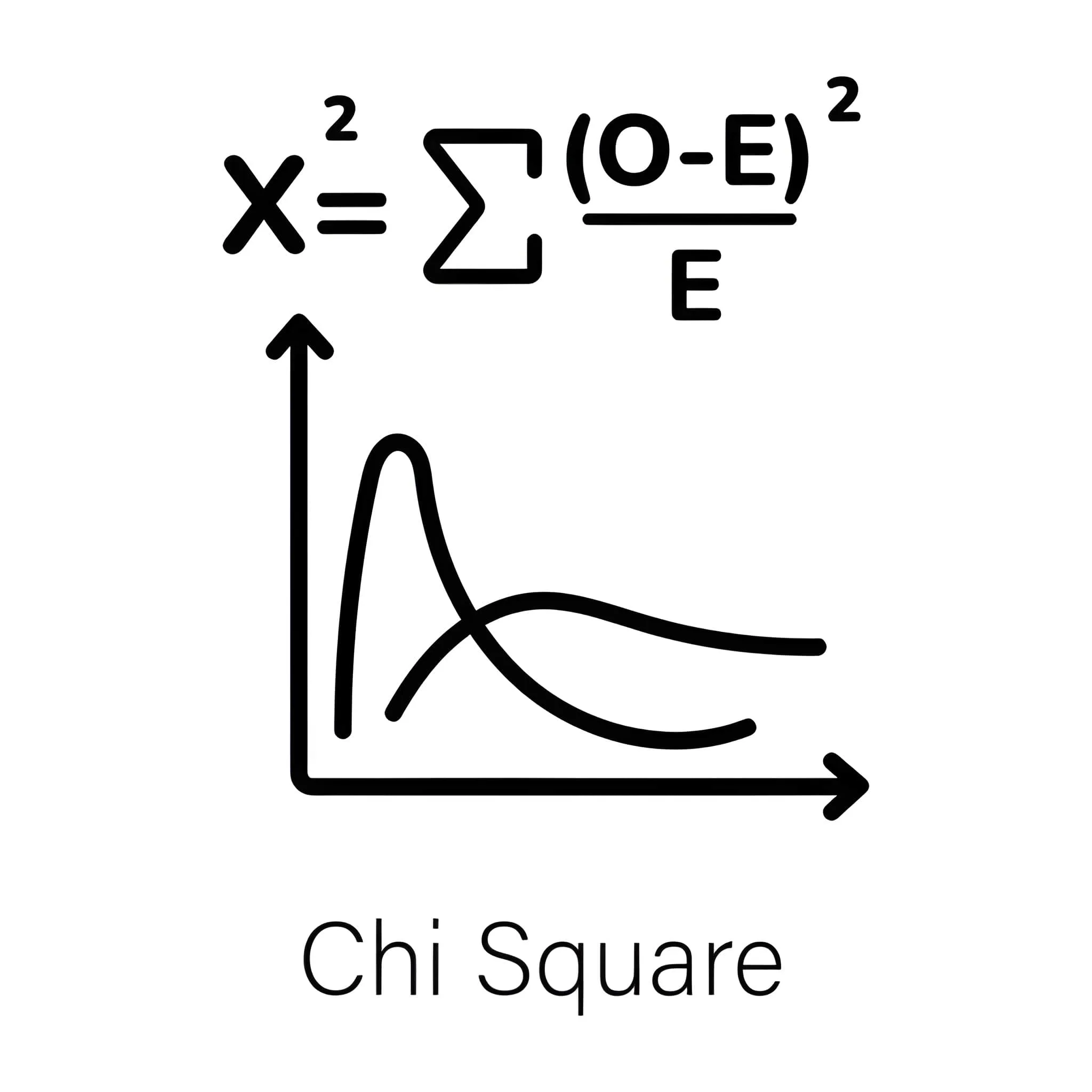
Chi-Square Definition
The Chi-Square is a Statistical Measure of the amount of deviation between what is observed and what is expected; therefore it is highly Useful for the Analysis of Categorical Data, and is widely used for Research, Machine Learning, Marketing, Genetics, Business Analytics, Probability Studies and many other areas.
A Chi-Square Calculator eases the process of conducting a chi test, processes the results of a chi square distribution, and validates hypotheses accurately.
Understanding the Chi-Square Test
The Chi-Square test evaluates whether the differences between observed and expected values are statistically significant. Two major types exist:
1. Chi-Square Goodness of Fit Test
This type of test measures how well the actual categorical data fits a theoretical distribution.
2. Chi-Square Test of Independence
This test determines if there is a relationship between two categorical variables.
Users can use chi square analysis calculator to analyze chi-square tables and generate the results (including the p-value) immediately.
Chi Square Formula
The standard chi square formula is:
χ² = Σ[(O - E)² / E]
Where:
This formula is the foundation of every chi square analysis, helping you evaluate whether the variation in your data is random or meaningful.
When to Use the Chi-Square Test?
Use the chi square test when:
The Chi-Square Calculator simplifies the entire computation and gives real-time results even for complex datasets.
How the Chi-Square Calculator Helps
Our advanced Chi-Square Calculator offers:
Whether you're a student, researcher, data analyst, or statistician, this tool is designed to provide fast and accurate chi square analysis results.
Chi Square Analysis Example
Example dataset:
Observed: 20, 30, 25
Expected: 25, 25, 25
You plug this into the Chi-Square Calculator, and it applies the chi square formula.
If the calculated χ² is 6.00 with p < 0.05, it means the differences are statistically significant.
This type of quick chi square example helps you understand your results instantly.
Chi Square Distribution Explained
The chi square distribution is a right-skewed distribution used to determine p-values in hypothesis testing. The curve shape changes based on degrees of freedom. This distribution is the backbone of the chi square test and is used to interpret which outcomes are statistically meaningful.
Advantages of Using a Chi-Square Calculator
FAQs
The Chi-Square test determines whether a notable difference exists between the observed and expected outcomes when using categorical data. The test is helpful for analyzing distributions, as well as the relationships between them.
To calculate Chi-Square, use the formula: χ² = Σ[(O - E)² / E]. You need to sum all the values in the equation, and compare the result with the chi square distribution. You can most easily find the chi-square result through a Chi-Square Calculator.
The chi square calculator p value tells you whether your results are statistically significant. A p-value < 0.05 usually means you reject the null hypothesis.
Yes, Chi-Square can be used on small samples; however, the expected frequency for many categories should typically be ≥ 5. Chi test results will not be very reliable when using very small samples.
An example of a Chi-Square analysis: If there is a difference in the observed and expected values of a given group (30, 40, 50 versus 40, 40, 40), you will calculate the Chi-Square value (χ²). The larger Chi-Square result indicates a more significant difference between the two series of values.
You can run Chi-Square assessments through exposure to probability via Chi Square analysis Calculators, which can determine the Chi-square statistic from calculator output, along with the accompanying p.value and degree of freedom.